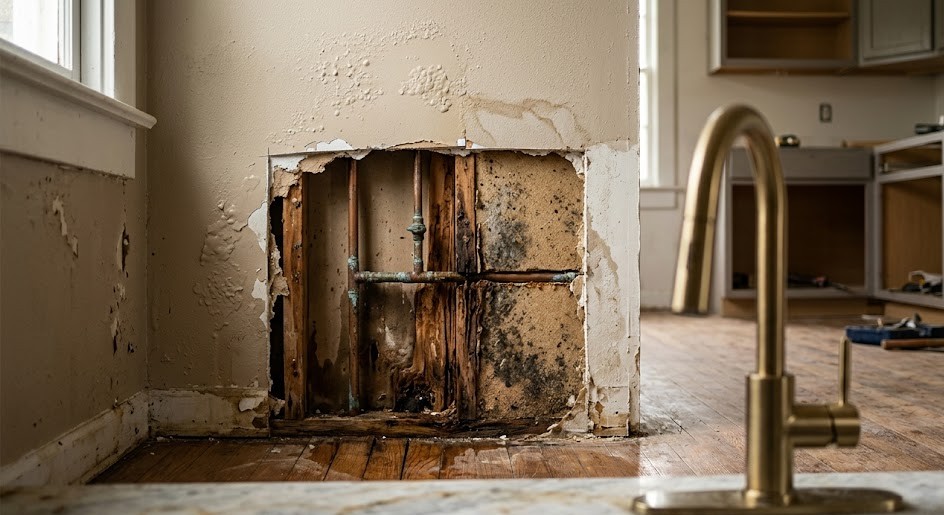
Every homeowner wants to save money on a remodel. That makes sense. Renovation budgets are tight, material prices keep climbing, and quotes from different contractors can vary by thousands of dollars. But there is a difference between saving money and cutting corners. One protects your wallet. The other drains it.
After more than 20 years of remodeling homes across New Orleans, Metairie, Kenner, and the surrounding areas, we have seen what happens when homeowners choose the lowest bid without asking the right questions. The damage is not always visible right away. Sometimes it takes six months. Sometimes it shows up the first time it rains. But it always shows up.
This is not a sales pitch. This is a breakdown of what corner cutting actually costs, based on real patterns we see in the field.
The Cheapest Bid Is Rarely the Final Price
When a contractor comes in significantly lower than everyone else, there is usually a reason. That reason is almost never “they found a more efficient way to do the work.”
Common reasons for a suspiciously low bid include leaving out line items that other contractors included, using lower grade materials without telling you, underestimating labor hours to win the job and then charging extras later, or skipping permits entirely.
The result? A project that starts cheap and ends expensive. Homeowners who chose the lowest bid often spend 20 to 40 percent more than the original quote by the time the job is actually finished. Change orders pile up. Materials need to be replaced. Work that was done wrong has to be torn out and redone.
A mid-range quote from a licensed home remodeling contractor in New Orleans that includes every line item will almost always cost less in the end than a bargain quote full of gaps.
Unlicensed Work and the Insurance Problem
Louisiana requires residential contractors to hold a valid license from the Louisiana State Licensing Board for Contractors. The threshold is $75,000 for residential work. That means any remodeling project above that amount legally requires a licensed contractor.
But plenty of homeowners hire unlicensed workers for jobs that exceed that limit. The savings feel real at first. Then something goes wrong.
Here is where the cost hits hardest: if unlicensed work causes damage to your home, your homeowner’s insurance may deny the claim. If a worker gets injured on your property and they do not carry workers’ compensation insurance, you could be held liable. If code violations are discovered during a future inspection or sale, you may be required to tear out and redo the work before closing.
The “savings” from hiring an unlicensed crew can turn into tens of thousands in unexpected costs. In some cases, homeowners have had to gut entire rooms and start over to bring the work up to code.
Cheap Materials Break Down Faster
Materials make up a large percentage of any remodel budget. It is one of the easiest places to cut costs, and one of the most expensive places to get it wrong.
Here are a few examples of what we see regularly:
Cabinets: Particleboard cabinets with a laminate finish cost less upfront than plywood core cabinets with hardwood faces. But in the humid New Orleans climate, particleboard swells, warps, and falls apart within a few years. Replacing cabinets after three years costs far more than choosing better materials the first time.
Flooring: Thin, low grade laminate flooring might look acceptable on install day. Within a year of foot traffic, pet claws, and kitchen spills, it chips, peels, and shows seams. A proper home remodeling company will walk you through material options at every price point so you can make informed decisions.
Plumbing fixtures: Cheap faucets and valves corrode faster, leak sooner, and often cannot be repaired because replacement parts do not exist. A $40 faucet that fails in 18 months and causes water damage will cost you far more than a $200 faucet that lasts a decade.
The pattern is the same in every category. Cheaper materials have shorter lifespans, fewer warranty protections, and higher failure rates. In a subtropical climate like Southeast Louisiana, where humidity and moisture are constant factors, material quality is not optional.
Skipping Permits Creates Hidden Liabilities
Permits exist for a reason. They make sure the work meets building codes. They protect your safety. And they create a legal record that the work was done properly.
When contractors skip permits to save time or money, the homeowner is the one who pays later. Common consequences include:
Failing a home inspection during a future sale, which can delay or kill a deal. Being required to open up finished walls so an inspector can verify electrical, plumbing, or structural work. Fines from the city or parish for unpermitted construction. Insurance companies refusing to cover damage related to unpermitted modifications.
In the New Orleans metro area, permit requirements vary by parish and municipality. Jefferson Parish has different processes than Orleans Parish. Kenner has its own building department. A contractor who tells you “we don’t need a permit for this” on a job that clearly requires one is either uninformed or trying to skip a step that will cost you later.
Poor Workmanship Shows Up in the Details
You can sometimes tell the quality of a remodel within the first few months just by looking at the small things. Grout lines that crack. Trim that does not sit flush. Doors that stick because the framing is slightly off. Tile that pops because the substrate was not properly prepared.
These are not cosmetic nitpicks. They are signs that the work was rushed, that the crew lacked experience, or that quality control was not part of the process.
Poor workmanship in less visible areas is even more costly. Electrical connections that are not up to code can cause fires. Plumbing joints that were not properly sealed will leak inside walls for months before you notice. Structural modifications done without engineering input can compromise your home’s integrity.
The gap between a cheap remodel and a quality remodel is not just about how it looks on day one. It is about how it holds up on day 365 and beyond.
The Emotional Cost Nobody Talks About
There is a cost to a bad remodel that does not show up on any invoice. Living through a renovation that goes wrong is stressful. Change orders, delays, arguments with contractors, discovering damage behind the walls, wondering if the work is safe. These things take a real toll.
We talk to homeowners regularly who come to us after a failed project with a different contractor. The frustration is always the same. They tried to save money. They ended up spending more. And they lost months of their time in the process.
A good contractor does not just build things correctly. They communicate clearly, set realistic timelines, and solve problems before they become emergencies. That level of service is part of what you pay for, and it is worth every dollar.
How to Save Money Without Cutting Corners
Saving money on a remodel is absolutely possible. You just have to do it the right way.
Prioritize the scope. Not every room needs to be remodeled at once. Focus your budget on the areas with the highest impact and do them right.
Choose materials strategically. You do not need the most expensive option in every category. A knowledgeable contractor can show you where to invest (countertops, flooring, plumbing fixtures) and where a mid-range option works just as well (hardware, light fixtures, paint).
Get detailed quotes. A proper estimate should list every material, labor cost, permit fee, and allowance. If a quote is vague, that is a warning sign. Compare quotes on specifics, not just the bottom line number.
Check licenses and references. Louisiana’s contractor licensing board has a public lookup tool. Use it. Ask for references from recent projects. Visit completed work if possible.
Plan before you demo. The most expensive changes happen mid-project. Spending more time on the design and planning phase saves money during construction.
The Bottom Line
Cutting corners on a home remodel does not save money. It moves the cost somewhere else, usually to a place where it is bigger and harder to fix.
If you are planning a remodel in New Orleans, Metairie, Kenner, LaPlace, or the surrounding area, the smartest investment you can make is choosing a contractor who does the job right the first time. Ask the hard questions. Compare detailed quotes. And think about the total cost of the project, not just the first check you write.
Continental Construction has been remodeling homes across Southeast Louisiana for over 20 years. If you want a straight answer about your project, reach out for a free consultation and let’s talk about what your remodel actually needs.